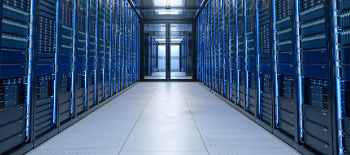
Increasing internet and AI use is driving continued growth in the number of vast data centers around the world. And as demand for data center capacity increases, the need to find power sources that meet the energy ‘trilemma’ of affordability, sustainability and reliability is an evolving challenge.
Global demand for power for data centers is slated to double by 2030 to about 1,000 Terawatt hours (TWh), according to the International Energy Agency (IEA). The power required by data centers in the United States alone is likely to triple by 2030 to about 134 Gigawatts (GW).
And by 2035, the power capacity needed for US data centers is expected to increase five-fold to 176 GW, a study by Deloitte found.
Data centers require uninterrupted energy supply to power them 24 hours a day, seven days a week. And that current and future demand is likely to put pressure on energy grids that already are powering other businesses and communities, as economies grapple with wider energy security and sustainability challenges.
There very likely will come an inflection point where data centers’ demand for power begins to significantly outstrip supply. Data center operators already are using or exploring alternative power sources like wind, solar or nuclear to meet this challenge.
Striking a balance
As they seek to find a balance of reliable and sustainable power, data center operators are increasingly using renewable energy like wind or solar to supplement traditional sources and reduce the pressure on local grid supply - and ensure their own continued power needs.
There’s been a noticeable uptick in so-called ‘behind the meter’ projects, whereby data centers build their own power-generation supply; in 2025, about 48 GW was projected to come from these sources, according to Cleanview’s project tracker.
From a reinsurance standpoint, underwriters are examining policy definitions to ensure that this changing situation is adequately taken into account. Whereas off-premises power sourcing would typically be sub-limited in policies, there’s now a new accumulation risk to be considered.
Other power options
While energy sources like wind, solar and hydro power can help to ease the pressure on for power for data centers, there are some limitations to overly depending on them for data center needs. All rely on natural phenomena to produce energy – and those are subject to fluctuations. Data centers require an uninterrupted power source.
Another challenge is the vast size of windfarms that would be needed to generate the amount of power necessary to meet data center demand, for example. Wind and solar farms require large spaces – and there are various risk and insurance considerations to be taken into account.
There’s growing interest – in the data center sector and beyond – in using nuclear energy to meet the economy’s increasing power needs.
And while some data centers are already using externally generated nuclear power as part of their energy mix, the next decade is likely to see increasing interest in data centers building and running their own small nuclear reactors.
Small modular reactors
Small modular reactors (SMRs) are site-flexible nuclear reactors that generate about one third of the power of a large, traditional nuclear reactor – up to 300 MW per unit. They can be built onsite and scaled as energy demand evolves. And like solar and wind, nuclear power has a low, or even zero-carbon footprint.
But unlike wind or solar energy, nuclear has a flat output curve. And, in concept, SMRs would take up a much smaller footprint of land than the wind or solar farms that would be needed to generate a comparable amount of power. They are also designed with enhanced safety systems and need less frequent refuelling than large nuclear reactors.
There are about 80 commercial SMR designs currently being developed, according to data from the International Atomic Energy Agency (IAEA). And a number of SMRs, for various uses, are at the licensing or development stage around the world.
In a world-first deal in October last year, Google signed an agreement with Kairos Power to deploy a fleet of SMRs to power AI data centers, the first of which is expected to be operational by 2030.
Small modular reactors (SMRs) are site-flexible nuclear reactors that generate about one third of the power of a large, traditional nuclear reactor
Nuclear pools for coverage?
In the United States, as in many other territories, nuclear accidents typically are excluded from property and liability insurance policies and are covered by pooling arrangements.
The Price-Anderson Act requires significant financial protection for large, commercial nuclear reactors in the United States. These requirements are met by the nuclear liability insurance pooling system. And many leading insurers and reinsurers are part of American Nuclear Insurers (ANI), a Connecticut-based pool that directly writes liability coverage for US reactors and also has strategic reinsurance partnerships with nuclear insurance pooling systems around the world.
Pooling systems have historically worked well for pooling capacity to cover the risks associated with nuclear liabilities which are very low frequency but potentially high severity. It’s widely believed that nuclear pools will expand to cover risks associated with SMRs once they become operational. But this is still an evolving technology and the potential risks associated with small, site-specific reactors are not yet fully understood.
The (re)insurance industry should work with the pooling system, nuclear industry and data center clients to thoroughly understand the possible risks and opportunities of this potential new energy source as a means to meet the extraordinary future energy needs of data centers.