There’s a saying, "still waters run deep." It’s a saying that really fits the current state of the commercial property insurance market. On the surface, things seem calm. Rates have fallen, and competition among insurers is heating up. But underneath, there’s more going on than meets the eye.
Over the course of my career, I’ve watched the property insurance landscape transform in ways I could never have imagined. At the start of my career, it was a much simpler game. We relied heavily on historical data, basic inspections, and experience-based judgment. Twenty or 30 years ago, the risks seemed more predictable. But as climate patterns shifted, urban areas expanded, and new hazards emerged, our underwriting approach has had to evolve too, and quickly.
More data at our fingertips
One of the most significant shifts I’ve seen is in the tools and data we now have at our fingertips. When I began, underwriting was more of an art, based on intuition, regional knowledge, and some rudimentary risk assessments. Today, it’s very much a science. We use advanced data analytics, GIS technology, remote sensing, and predictive modeling to get a much clearer picture of risk. For example, we can now analyze a property’s proximity to flood zones, its construction materials, and even the local vegetation or drainage patterns, all before we even step on-site.
This level of detail is invaluable because it enables us to differentiate risks at a granular level, helping us set premiums that reflect the true exposure and avoid over- or underpricing the risk.
Equally important is our focus on the valuation of properties. Proper valuation is a cornerstone of accurate risk assessment and fair pricing. We work hard to ensure our clients understand why precise property valuation matters. It’s not just about the market value, but about capturing the true insurable value. Accurate valuation considers factors such as the property's condition, replacement costs, location-specific risks, and potential future depreciation. When we have a clear understanding of a property’s value, we can better determine appropriate coverage limits, identify potential gaps, and advise on necessary improvements or risk mitigation measures.
With greater frequency
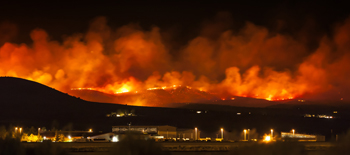
So, using new data and tech tools for risk assessment and valuation is more important than ever to help us get ready for and handle the growing impact of natural disasters. Wildfires, hurricanes, and floods are no longer rare events but almost annual occurrences in many regions. For instance, the 2025 Los Angeles wildfires caused insured losses of US$40 billion, making it the costliest wildfire event to date.
Traditionally, hurricane seasons dominated annual property loss discussions. Not now. Interestingly enough, no hurricane struck the mainland U.S. last year. This was the first time in 10 years. Yet, loss trends were not minimal at all. In 2025, overall losses in North America totaled US$133 billion, of which approximately US$ 93 billion were insured losses, mainly attributable to the LA wildfires, Hurricane Melissa’s impact on Jamaica, and a number of severe thunderstorms.
Thunderstorms, and the potential for heavy rain, tornadoes and damaging hail, are getting much more attention. They regularly cause tens of billions in losses, especially in the US. In 2025, aggregated severe thunderstorm losses in the United States resulted in US$ 56 billion in losses, of which US$ 42 billion was insured, significantly higher than the 10-year average (US$ 39 billion overall losses with US$ 29 billion of insured losses).
When a thunderstorm hits, there’s more insured value per square mile than there was 20 years ago. We’ve seen continued urban expansion and larger homes with higher replacement values. On the commercial side, there’s more expensive, more expansive commercial facilities. Think distribution centers, manufacturing, healthcare and data centers. With wind, hail and lightning being standard covered perils under most property policies, there are more losses to tally.
Over the years, I’ve seen how investments in better infrastructure -- like improved drainage systems, wildfire-resistant building codes, and flood barriers -- can significantly reduce potential claims. Regions that have prioritized resilience are seeing tangible benefits.
Leveraging loss prevention
Considering the consistently substantial annual losses, proactive risk mitigation and community resilience are more important than ever.
Over the years, I’ve seen how investments in better infrastructure -- like improved drainage systems, wildfire-resistant building codes, and flood barriers -- can significantly reduce potential claims. Regions that have prioritized resilience are seeing tangible benefits. For example, stricter building codes that mandate fire-resistant roofing materials in wildfire prone areas or elevating structures in flood-prone areas have proven effective, saving money by reducing the frequency and severity of potential losses.
Of course, these investments come with costs, but in the long run, they’re well worth it. What’s exciting is that technology is making it easier and more affordable for property owners and communities to implement these measures. Remote sensing, drone inspections, and real-time data collection allow us to monitor properties and assess risks more accurately than ever before. We can now provide targeted recommendations that help property owners understand exactly what they need to do to protect their assets, and how much that will cost.
A significant shift I've observed is in how the commercial property insurance market handles capacity and underwriting criteria. In high-risk regions, many markets no longer provide blanket coverage without restrictions. Instead, insurers are implementing higher deductibles, restricting coverage for certain secondary perils, or mandating specific mitigation measures as conditions for coverage. In some instances, exclusions or sublimits are added for particular risks, encouraging policyholders to proactively minimize their exposure.
It's worth noting that AXA XL's capacity has remained consistent throughout these market adjustments, demonstrating their ongoing commitment to supporting clients even in challenging environments. This stability allows AXA XL to continue offering tailored solutions while maintaining a strong underwriting discipline.
Fostering resilience
In today’s commercial property insurance market, managing risk is no longer enough — fostering resilience is essential. We’re collaborating more closely than ever with clients, encouraging upfront investments in resilience measures. Many now incorporate smart sensors, early warning systems, and routine maintenance into their risk management plans. These technologies can detect early signs of fire, flood, or other hazards, giving property owners valuable time to respond and reduce damage. I’ve seen cases where a small investment in early warning sensors cut claims by 50% or more.
What’s most rewarding is witnessing a shift in mindset. Clients now see that resilience isn’t just about insurance coverage. It’s about taking ownership of their risk environment. They’re upgrading buildings, managing vegetation, and engaging in community mitigation efforts. It’s a true partnership that makes a real difference.
Looking ahead, the property market’s future depends on staying ahead of evolving risks. We must leverage new technologies and data sources like climate modeling, exposure management platforms, and AI-driven risk prediction to anticipate and proactively address hazards.
At the same time, clients need to continue their resilience efforts. Collaboration among insurers, brokers, clients, regulators, and communities will be key. Despite challenges like climate change and urbanization, I remain optimistic. Our industry has proven resilient and adaptable, turning daunting risks into manageable challenges through innovation.
Ultimately, the journey from intuition-based approaches to sophisticated, data-driven strategies has been remarkable. We’re better equipped than ever to handle complex risks. The key is collaboration and a proactive, resilience-focused mindset. That’s how we’ll build a more secure, sustainable future for property owners everywhere.
Listen to more of what Michele has to say in her recent Leader’s Edge podcast – Primary Focus on Secondary Peril.