Vicky Roberts-Mills, AXA XL’s Global Head of Energy Transition, has spent her entire career negotiating the twists and turns of the energy industry through the lenses of risk and insurance. As the challenges of geopolitical volatility, increasing electricity demand and diversification of generation shape the next big shift, she explains how insurance is meeting the challenges of the future energy mix.
I’ve been in the energy industry for my whole career. That’s included working at a major insurance broker as well as in-house at an energy company, working in risk management and insurance buying.
I’ve always been fascinated by the evolution of the energy sector.
It helps me see things differently and consider alternative viewpoints. I understand the challenges of trying to sell a risk management or insurance solution or service into a business, being very close to changing risk profiles and exposures, asking questions of the insurance markets and seeking practical solutions.
Energy companies, risk engineers, underwriters and claims professionals are all trying to solve the same problems, just from slightly different angles. One of the great things about being at AXA XL is that we have such breadth and depth of technical knowledge across the organization. We use those skills to meet our clients’ goals, developing from an organisation that pays claims to one that’s also an adviser, helping organisations to manage and reduce risk, finding innovative ways to help them make their projects successful.
Expertise to fuel change
The oil and gas industries are mature. The challenge is how risk is allocated, how clients manage their risks, buy insurance coverage and potentially use wider risk management tools such as captives (when a company effectively self-insures). The risks can shift and are becoming ever-more interconnected, but generally speaking, there’s a blueprint for success. In the renewables and alternative energy fields, however, there are more disruptors. The sponsor of a project might be a pension fund. The tech might have been devised by a start-up. There’s often a greater diversity of client types, balance sheets and appetites for risk, among other variables.
But many of the fundamentals remain the same. It’s still about risk management, creating the right tools for the job and applying expertise. Our industry has great depth and breadth of knowledge. At AXA XL, for instance, we have risk engineering specialists, talent that has come to us from an energy or a tech background, skilled claims personnel, and innovative, experienced underwriters.
My role is about adopting a growth mindset and looking at how we can grow in a sustainable way, both economically and environmentally. Many of the opportunities we see are multi-class, multi-territory and we need to bring many different skillsets together. I find that fun.
Flexible, local supply
Energy security and reliability are priority issues for companies, societies and individuals. We’re all aware that global demand for energy is increasing, especially for the electricity that is needed to power data centers and the rapid uptake of AI. Recent events have shown us, once again, how dramatically supply and demand can be affected by factors beyond the industry’s control – whether that be geopolitical volatility, natural catastrophe or a cyber event.
We’re seeing a move towards a more active consumption of energy, rather than passive consumption.
Historically, the energy eco-system was very centralized. But there’s now a definite shift towards the idea of creating more localised, flexible and diversified energy supply. That will require a mix of multiple energy sources. Surveys show that even the leaders of oil and gas majors believe that renewable energy will play a part in meeting future demand – see our latest survey of energy leaders for more on that.
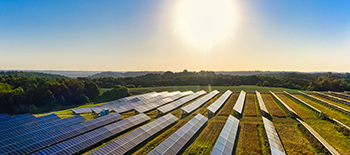
I feel confident about our collective ability to deliver an energy mix for the future. There is a huge amount of investment going into alternative energy sources. And the tech and infrastructure can be scaled fast. Building a solar pant is a relatively quick process compared with extracting and processing carbon-based energy sources, for instance. But oil and gas are important too, providing consistent power at high energy densities.
Thinking differently
Individual consumers are thinking differently about energy too. They’re more aware of the energy they use and how they use it. People are increasingly conscious of fluctuating energy bills as well as the need to reduce greenhouse gas emissions.
We’re seeing a move towards a more active consumption of energy, rather than passive consumption. The least-polluting, cheapest energy is the energy you don’t use. This too points towards a future energy mix that’s more flexible and local.
We’ll need to ask questions, to continue to be curious, to learn and apply that knowledge to our clients’ challenges as they evolve. That’s the key to supporting the energy mix of the future – providing the resources and expertise to help the energy industry deliver safe, reliable power across the world.